Thursday, September 17, 2020

The Land of Crimson Clouds


WASHINGTON — NASA is considering approving by next April up to two planetary science missions from four proposals under review, including one to Venus that scientists involved in the project said could help determine whether or not that planet harbors life.

An international research team on Monday described evidence of potential microbes residing in the harshly acidic Venusian clouds: traces of phosphine, a gas that on Earth is produced by bacteria inhabiting oxygen-free environments. It provided strong potential evidence of life beyond Earth.

The U.S. space agency in February shortlisted four proposed missions that are now being reviewed by a NASA panel, two of which would involve robotic probes to Venus. One of those, called DAVINCI+, would send a probe into the Venusian atmosphere.

“Davinci is the logical one to choose if you’re motivated in part by wanting to follow this up – because the way to follow this up is to actually go there and see what’s going on in the atmosphere,” David Grinspoon, an astrobiologist working on the DAVINCI+ proposal, told Reuters on Tuesday.

The three other proposals include: IVO, a mission to Jupiter’s volcanically active moon Io; Trident, a fly-by trek to map Neptune’s icy moon Triton; and VERITAS, the second of the proposed Venus missions that instead would focus on understanding the planet’s geological history. NASA has said it may choose one or two of the missions.

The search for life elsewhere in the solar system has until now not focused on Venus. In fact, NASA in July launched a next-generation rover to look for traces of potential past life on Mars.

In light of Monday’s findings, NASA Administrator Jim Bridenstine said that is “time to prioritize Venus.” In a statement, Bridenstine said the selection process for the new potential missions will be tough “but I know the process will be fair and unbiased.”

Grinspoon, a senior scientist at the Planetary Science Institute, said the selection process should be responsive to recent scientific discoveries.

“If there was a mission to Triton as a finalist, and then somebody with a telescope observed, you know, a soccer stadium on Triton, then arguably yeah, we should send a mission there,” Grinspoon said.

 Financial Times


 Head of Russian Space Program says Venus is "Russian Planet".

Russian space agency chief Dmitry Rogozin called Venus a “Russian planet” on Tuesday at an industry exhibition taking place in Moscow.

The unusual comment followed the recent high-profile discovery of significant sources of phosphine gas in the planet’s atmosphere, a possible sign of life.

“Our country was the first and only one to successfully land on Venus,” Rogozin said, as quoted by The Moscow Times, referring to the country’s successful explorations of Venus in the 60s, 70s and 80s.

Roscosmos piled on, writing that the “enormous gap between the Soviet Union and its competitors in the investigation of Venus contributed to the fact that the United States called Venus a Soviet planet,” in a statement quoted by Euronews.

The Soviet Union launched a number of Venera spacecraft to the hostile planet, which completed a number of firsts including the first orbit and crash-landing. Venera 7 eventually became the first lander to make a successful landing on Venus, in 1970, sending data back to Earth for 23 minutes before it succumbed to the planet’s hellish conditions.

NASA, in contrast, has never focused on Venetian exploration — though it did send an orbiter and a probe to the planet in 1978.

Roscosmos has announced plans to launch an independent expedition to Venus. Such a mission would follow an already planned collaborative mission with the US called Venera-D.

But Rogozin pushed back against the recent findings that suggest that life could exist in the planet’s atmosphere.

“The [Russian] spacecraft gathered information about the planet — it is like hell over there,” Rogozin said.


 Following the study’s publication Monday, the Breakthrough Initiatives program funded by Russian billionaire Yuri Milner announced that it will fund a study “into the possibility of primitive life” in Venus’ clouds led by Sara Seager from the Massachusetts Institute of Technology.

 The Moscow Times


Monday, July 6, 2020

Role of Human and AI in Future Space Endeavors

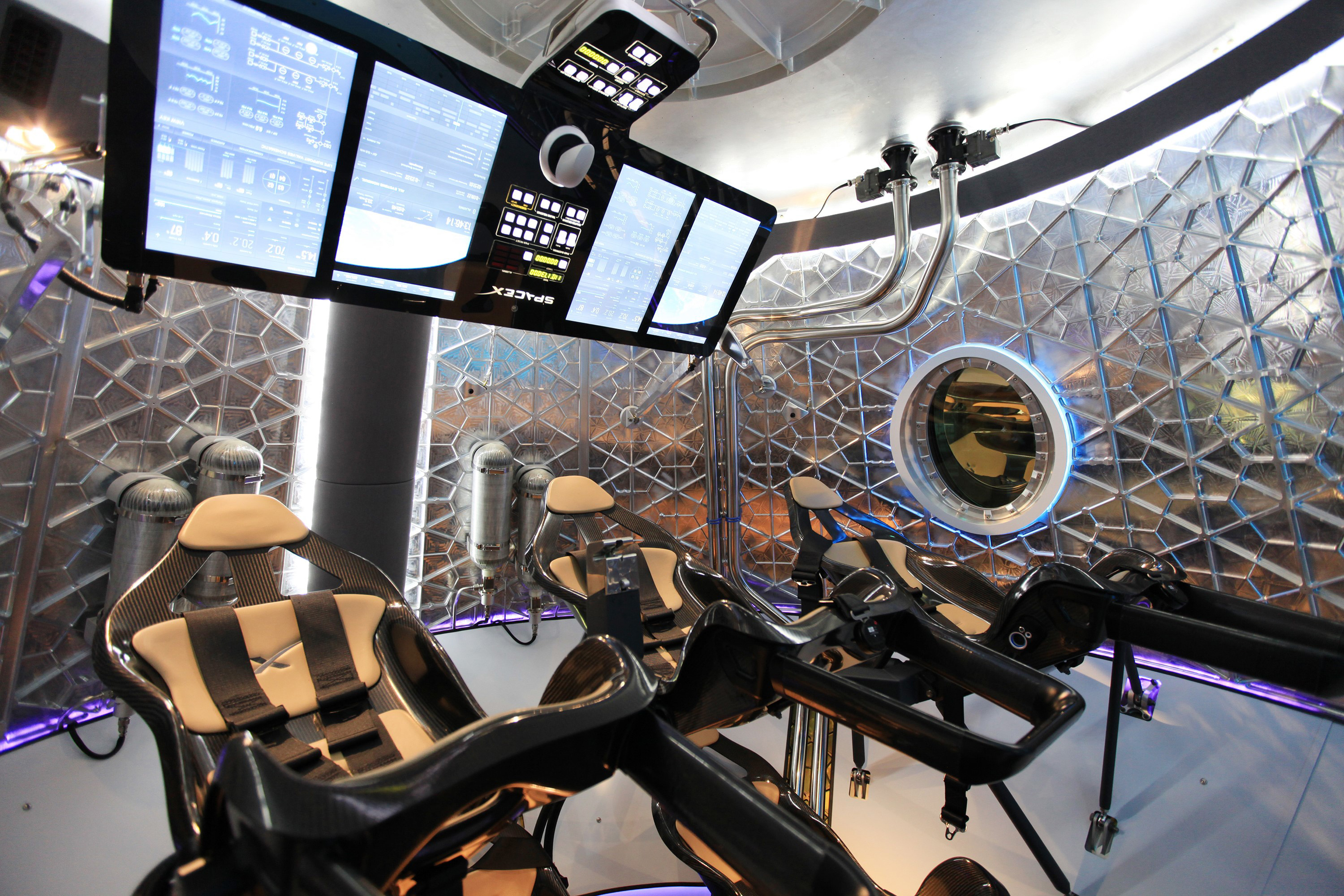
Dragon V2 interiorDimitri Gerondidakis / NASA

And increased autonomy is practically essential to making some forms of spaceflight even work. Ad Astra is a Houston-based company that’s looking to make plasma rocket propulsion technology viable. The experimental engine uses plasma made out of argon gas, which is heated using electromagnetic waves. A “tuning” process overseen by the system’s software automatically figures out the optimal frequencies for this heating. The engine comes to full power in just a few milliseconds. “There’s no way for a human to respond to something like that in time,” says CEO Franklin Chang Díaz, a former astronaut who flew on several space shuttle missions from 1986 to 2002. Algorithms in the control system are used to recognize changing conditions in the rocket as it’s moving through the startup sequence—and act accordingly. “We wouldn’t be able to do any of this well without software,” he says.

But overrelying on software and autonomous systems in spaceflight creates new opportunities for problems to arise. That’s especially a concern for many of the space industry’s new contenders, who aren’t necessarily used to the kind of aggressive and comprehensive testing needed to weed out problems in software and are still trying to strike a good balance between automation and manual control.

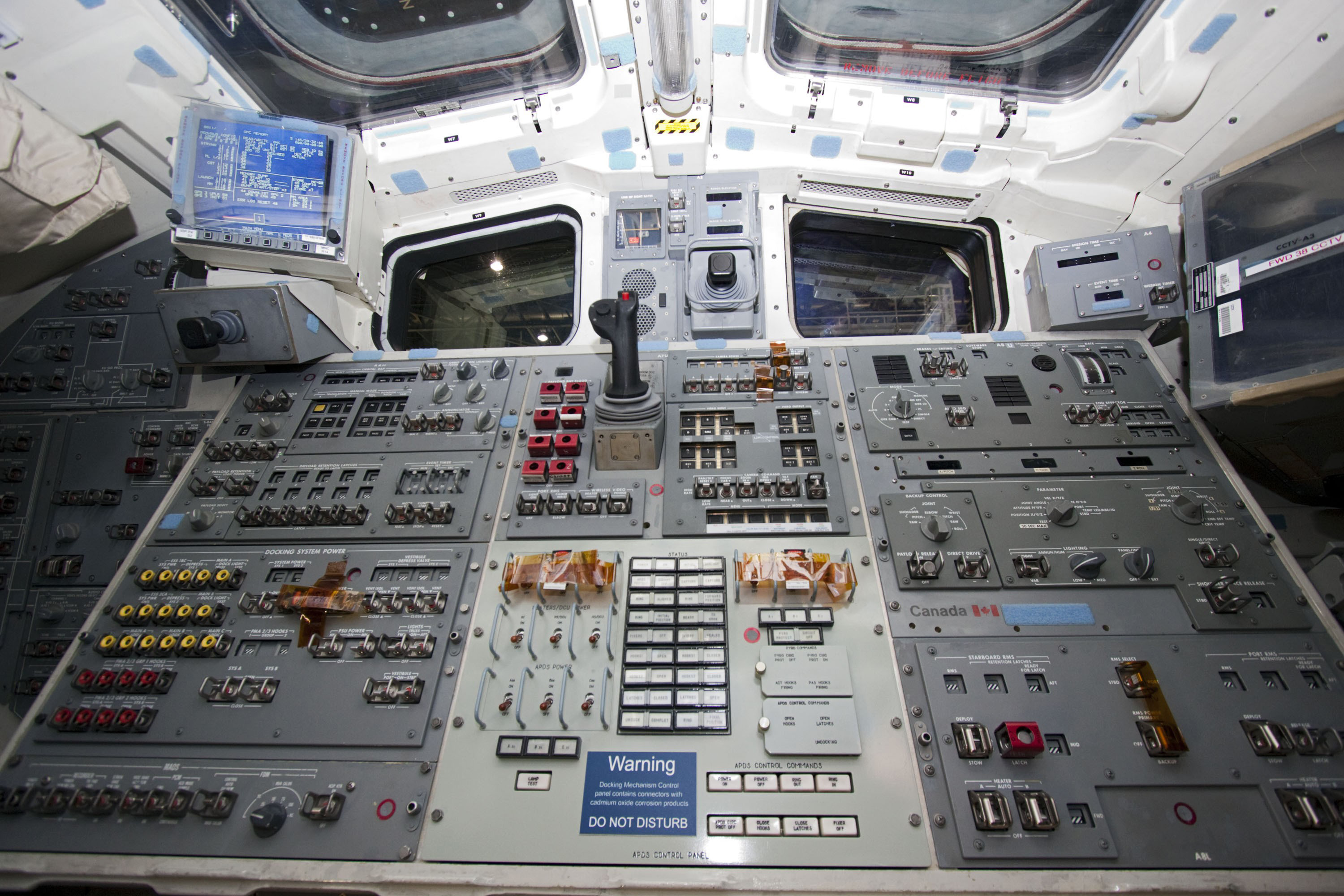
  • space shuttle Atlantis
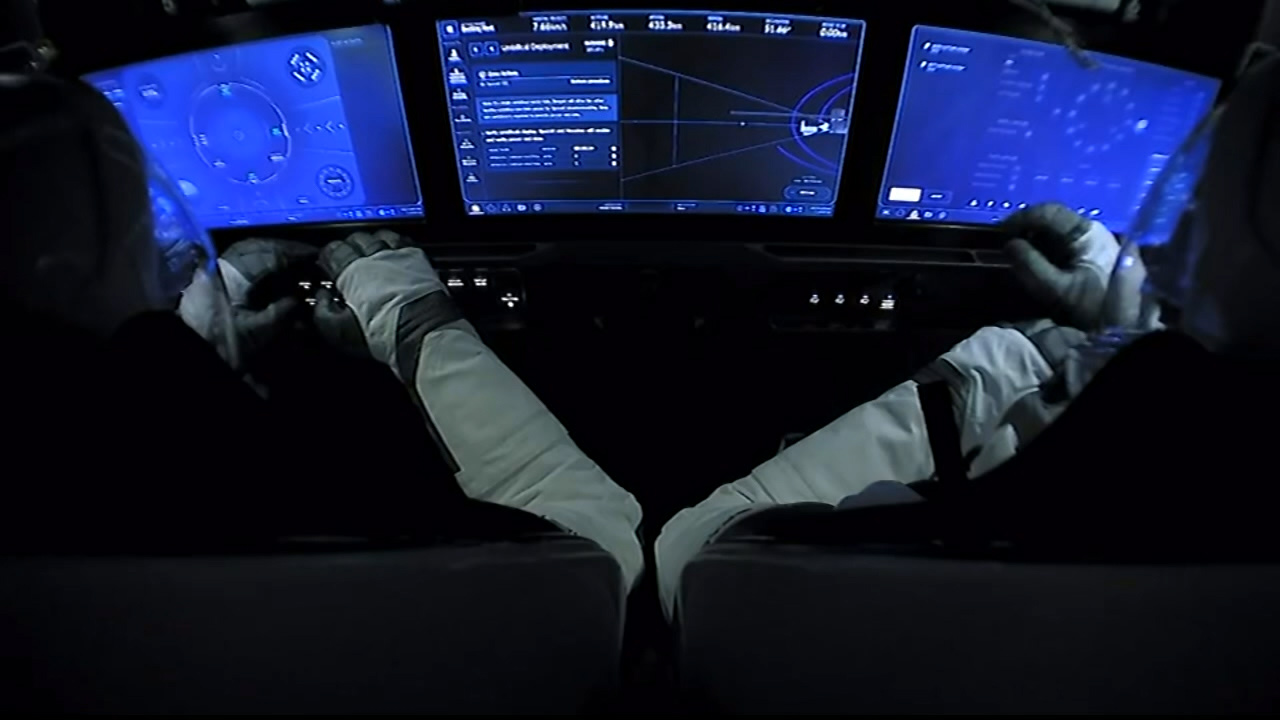
  • inflight video of Dragon 2 mission

Nowadays, a few errors in over one million lines of code could spell the difference between mission success and mission failure. We saw that late last year, when Boeing’s Starliner capsule (the other vehicle NASA is counting on to send American astronauts into space) failed to make it to the ISS because of a glitch in its internal timer. A human pilot could have overridden the glitch that ended up burning Starliner’s thrusters prematurely. NASA administrator Jim Bridenstine remarked soon after Starliner’s problems arose: “Had we had an astronaut on board, we very well may be at the International Space Station right now.” 

But it was later revealed that many other errors in the software had not been caught before launch, including one that could have led to the destruction of the spacecraft. And that was something human crew members could easily have overridden.

Boeing is certainly no stranger to building and testing spaceflight technologies, so it was a surprise to see the company fail to catch these problems before the Starliner test flight. “Software defects, particularly in complex spacecraft code, are not unexpected,” NASA said when the second glitch was made public. “However, there were numerous instances where the Boeing software quality processes either should have or could have uncovered the defects.” Boeing declined a request for comment.

According to Luke Schreier, the vice president and general manager of aerospace at NI (formerly National Instruments), problems in software are inevitable, whether in autonomous vehicles or in spacecraft. “That’s just life,” he says. The only real solution is to aggressively test ahead of time to find those issues and fix them: “You have to have a really rigorous software testing program to find those mistakes that will inevitably be there.”

Enter AI

Space, however, is a unique environment to test for. The conditions a spacecraft will encounter aren’t easy to emulate on the ground. While an autonomous vehicle can be taken out of the simulator and eased into lighter real-world conditions to refine the software little by little, you can’t really do the same thing for a launch vehicle. Launch, spaceflight, and a return to Earth are actions that either happen or they don’t—there is no “light” version.

This, says Schreier, is why AI is such a big deal in spaceflight nowadays—you can develop an autonomous system that is capable of anticipating those conditions, rather than requiring the conditions to be learned during a specific simulation. “You couldn’t possibly simulate on your own all the corner cases of the new hardware you’re designing,” he says. 

So for some groups, testing software isn’t just a matter of finding and fixing errors in the code; it’s also a way to train AI-driven software. Take Virgin Orbit, for example, which recently tried to send its LauncherOne vehicle into space for the first time. The company worked with NI to develop a test bench that looped together all the vehicle’s sensors and avionics with the software meant to run a mission into orbit (down to the exact length of wiring used within the vehicle). By the time LauncherOne was ready to fly, it believed it had already been in space thousands of times thanks to the testing, and it had already faced many different kinds of scenarios.

Of course, the LauncherOne’s first test flight ended in failure, for reasons that have still not been disclosed. If it was due to software limitations, the attempt is yet another sign there’s a limit to how much an AI can be trained to face real-world conditions. 

Raines adds that in contrast to the slower approach NASA takes for testing, private companies are able to move much more rapidly. For some, like SpaceX, this works out well. For others, like Boeing, it can lead to some surprising hiccups. 

Ultimately, “the worst thing you can do is make something fully manual or fully autonomous,” says Nathan Uitenbroek, another NASA engineer working on Orion’s software development. Humans have to be able to intervene if the software is glitching up or if the computer’s memory is destroyed by an unanticipated event (like a blast of cosmic rays). But they also rely on the software to inform them when other problems arise. 

NASA is used to figuring out this balance, and it has redundancy built into its crewed vehicles. The space shuttle operated on multiple computers using the same software, and if one had a problem, the others could take over. A separate computer ran on entirely different software, so it could take over the entire spacecraft if a systemic glitch was affecting the others. Raines and Uitenbroek say the same redundancy is used on Orion, which also includes a layer of automatic function that bypasses the software entirely for critical functions like parachute release. 

On the Crew Dragon, there are instances where astronauts can manually initiate abort sequences, and where they can override software on the basis of new inputs. But the design of these vehicles means it’s more difficult now for the human to take complete control. The touch-screen console is still tied to the spacecraft’s software, and you can’t just bypass it entirely when you want to take over the spacecraft, even in an emergency. 

There’s no consensus on how much further the human role in spaceflight will—or should—shrink. Uitenbroek thinks trying to develop software that can account for every possible contingency is simply impractical, especially when you have deadlines to make. 

Chang Díaz disagrees, saying the world is shifting “to a point where eventually the human is going to be taken out of the equation.” 

Which approach wins out may depend on the level of success achieved by the different parties sending people into space. NASA has no intention of taking humans out of the equation, but if commercial companies find they have an easier time minimizing the human pilot’s role and letting the AI take charge, than touch screens and pilotless flight to the ISS are only a taste of what’s to come.

From: MIT Technology Review
https://www.technologyreview.com/2020/07/03/1004788/spacecraft-spacefight-autonomous-software-ai/

Sunday, December 16, 2018

Virgin Space Fligt of Virgin Galactic

On December 13 2018 Virgin Galactic made its first successful crewed suborbital flight.


  It was the first ever airplane-style (horizontal) takeoff and landing of the space vehicle.


The SpaceShipTwo was taken to the altitude of 16 km by the mothership WhiteKnightTwo where it was released.


 Then it turned of its own rocket engine and accelerated.


In free flight it reached the altitude of about 84 km.


 After 15 minutes SpaceShipTwo touched down the Mojave desert strip.


Well done Sir Richard!

Friday, September 30, 2016

Mars Vision

There is something about this day, I was writing about October 4. It holds true, even if this time something happened one week earlier. On September 27, 2016 Elon Musk, the founder of SpaceX, unveiled his plan of colonizing Mars at the International Astronautical Congress in Guadalajara, Mexico.


The plan calls for flying 10,000 spaceships to create a one million people colony on Mars. Fascinating concept no doubt. Each spaceship should carry 100 passengers. To launch such a spaceship the size of the rocket which would be needed exceeds anything that has been built so far. To demonstrate the scale a comparison of rockets was shown.

Wonder why there is no Space Shuttle in the table? Perhaps to somebody's surprise, the answer is because the Space Shuttle is not actually a rocket. However, the table is missing one rocket which deserves inclusion at least because it would be the closest by performance to the proposed Mars rocket. Energia launch rocket which was a vehicle to carry to orbit Soviet space shuttle Buran. Unlike the US space shuttle however, Energia was a true rocket capable of delivering any payload to orbit, and not only a shuttle.

Among many other things in the presentation, particularly interesting to me was the concept of a cluster of engines which are controlled in such a fashion that they could counteract a failure of any separate engine. It reminded me of something which I was working on for a number of years. This concept was implemented on Energia launch rocket and successfully tested in flight. Unlike it, the US space shuttle was designed with only three main engines fed from the huge fuel tank, and two solid fuel boosters, with practically zero ability to react in case of a failure. Intentionally or not, SpaceX seems learned the lesson. Their jumbo rocket is planned to be equipped with 42 engines.  

Musk has long said that he founded SpaceX in 2002 chiefly to help humanity colonize Mars. Becoming a multiplanet species would serve as an insurance policy, minimizing the risk of humanity's extinction should something terrible happen on Earth, he has said.
Musk reiterated that argument during the IAC presentation Tuesday. But he also put forth another reason why settling Mars is worth the trouble and the risk.
 "It would be an incredible adventure; it would be the most inspiring thing that I can possibly imagine," he said. "Life needs to be more than just solving problems every day. You need to wake up and be excited about the future, and be inspired and want to live."
Can't say better!

Monday, July 4, 2016

Another step on the way to learn about the origins of the Solar System


Juno's primary goal is to reveal the story of Jupiter's formation and evolution. Using long-proven technologies on a spinning spacecraft placed in an elliptical polar orbit, Juno will observe Jupiter's gravity and magnetic fields, atmospheric dynamics and composition, and evolution.


https://www.youtube.com/watch?v=XpsQimYhNkA

Saturday, May 14, 2016

If you are a science and space fan you have undoubtedly read or at least heard of Carl Sagan's book "Contact"  (or watched the movie with the same title). It started with SETI (Search for Extraterrestrial Intelligence) detecting the signal from the far away civilization.

Unfortunately in reality, despite listening to sky for more than half a century, you could say that the silence has been deafening. Since its beginnings SETI has failed to detect the presence of alien civilizations. Enthusiasm and the government funding for the project have dried out. The project has gotten minuscule 24-30 hours of radio-telescopes time a year (!) from thousands the had before.
SETI projects traditionally search for radio or optical signals that seem to be from an artificial source, for instance because they are focused in frequency and repeat in a regular manner. But funding has been patchy: in the early 1990s, NASA sponsored some searches, but dropped that support in 1993. “In recent years, the total worldwide support for SETI was about half a million dollars, mostly in the United States, and all from private gifts,” says Frank Drake, one of the pioneers of modern SETI, who is also on the Breakthrough Listen team.

But this may change now. On 20th of July 2015 at London’s Royal Society  Russian billionaire Yuri Milner announced a shot in the arm for SETI: a US$100-million for 10 years to provide the most comprehensive hunt for alien communications so far.

The initiative, called Breakthrough Listen, will see radio telescopes at Green Bank in West Virginia, the Parkes Observatory in Australia, and the Lick Observatory's optical telescope in San Jose, California, scanning around one million stars in the Milky Way and a hundred nearby galaxies. Milner is also releasing an open letter backing the idea of an intensified search; it has been co-signed by numerous scientists, including physicist Stephen Hawking. “In an infinite Universe, there must be other life,” Hawking told luminaries at today's launch event. “There is no bigger question. It is time to commit to finding the answer,” he said.


 Milner, who is funding the project, made his fortune through investments in Facebook and other Internet businesses (particularly Maul.ru, Russian-speaking versions of Facebook, Amazon and other online services modeled after American original ones), and in 2012 established lucrative ‘Breakthrough’ prizes to reward excellence in the life sciences, fundamental physics, and mathematics. A particle-physics graduate, he jokes that his interest in SETI began in 1961, the year of his birth; he was named after Russian cosmonaut Yuri Gagarin, instilling a life-long fascination with space and the possibility of alien life.
 

Tuesday, March 3, 2015

NASA's Dawn Spacecraft Approaches Ceres

NASA's Dawn spacecraft has returned new images captured on approach to its historic orbit insertion at the dwarf planet Ceres. Dawn will be the first mission to successfully visit a dwarf planet when it enters orbit around Ceres on Friday, March 6.


Ceres rotates in this frame from a movie comprised of images taken by NASA's Dawn mission during its approach to the dwarf planet. The images were taken on Feb. 19, 2015, from a distance of nearly 29,000 miles (46,000 kilometers).